When most people think about digital transformation in finance, they picture algorithmic trading floors, sleek customer-facing apps, or chatbots resolving queries in milliseconds. But having spent the better part of a decade working on data strategy at BRAIN TECHNOLOGY LIMITED, I can tell you that the real revolution—the one that quietly determines whether a firm sinks or swims—is happening in the middle and back office. These are the departments that never make headlines: trade settlement, reconciliations, regulatory reporting, client onboarding, collateral management, and risk data aggregation. They are the grimy engine room of the financial ship, and for decades, they have run on a diet of spreadsheets, manual handoffs, and institutional memory.
The problem is glaringly obvious to anyone who has sat through a month-end close review. Operations teams are drowning in repetitive tasks that require just enough judgment to avoid full automation, but not enough complexity to justify the headcount. The cost is not just financial—it is operational risk, audit findings, and employee burnout. Industry surveys consistently put the percentage of time spent by operations staff on manually intensive tasks at anywhere from 40% to 60%. That is not a productivity gap; that is a structural weakness. And with interest margins compressed and clients demanding faster service, the middle and back office have become the new frontier for competitive advantage.
This article is not a theoretical treatise. It is a practitioner’s view, drawn from real engagements, real failures, and real recoveries. I will walk you through the key dimensions of automation transformation in these functions—from intelligent document processing to workflow orchestration, from data governance to change management. Along the way, I will share case studies and personal anecdotes that illustrate both the promise and the pitfalls. If you are a COO, an operations lead, or a technology strategist, my hope is that this gives you a practical roadmap, not just a motivational speech.
The thesis is simple: automation in the middle and back office is not about replacing people with robots. It is about re-architecting work so that human talent is deployed where it creates value, and machines handle the toil. Done right, it reduces costs by 30-40%, eliminates near-miss errors, and—perhaps most importantly—frees up your best people to think. Done wrong, it creates zombie processes that are automated in name but broken in practice. Let’s dive into the specifics.
## The Unseen Complexity of Core OperationsFrom Spreadsheet Chaos to Intelligent Orchestration
Let’s start with the brutal truth: most middle and back office processes are not designed at all. They are accreted. A process starts with one person doing a task in Excel. Then a checker is added to verify their work. Then a second system comes along, and someone builds a manual bridge. Then a regulatory change forces a new field, and someone adds a macro to copy it over. Before you know it, you have a workflow that involves seven handoffs, four systems, and nobody who understands the whole thing end-to-end. This is what we call “spaghetti automation”—and it is everywhere.
I recall a client—a mid-sized asset manager in London—who had a NAV reconciliation process that took their ops team six hours every day. Six hours! When we mapped it out, we found that three different teams were manually re-typing data from one spreadsheet into another, because the original system generated a report that no one had ever configured properly. The irony was that they had a modern OMS and a modern RMS, but the data ingestion layer was still a glorified Post-it note convention. The fix wasn’t a new system; it was a lightweight orchestration layer that pulled data via API, applied validation rules, and only escalated exceptions to humans.
The market has noticed this gap. Over the past five years, we have seen an explosion in “process orchestration” platforms—think tools like Camunda, UiPath’s Action Center, or even homegrown workflow engines. But the key insight is not the tool; it is the discipline of process architecture. Before you automate, you must re-document the process as it actually happens, not as the operations manual describes it. This means walking the floor, interviewing the junior analysts who actually do the work, and capturing the tacit rules that live in people’s heads. That exercise alone usually surfaces 20-30% of steps that are pure waste—no value add, just error correction or handwashing.
Once you have a clean process map, you can start assigning tasks to the right actor: human, rule-based bot, or machine learning model. The art here is to avoid the trap of over-automating. A process that requires judgment—say, approving a complex collateral swap with a distressed counterparty—should remain human, but with machine assistance that pre-screens the easy cases. A process that is purely mechanical—say, matching a SWIFT message to a trade ticket—should be 100% automated. The middle ground, where most firms get stuck, is the “judgment-light” task: it looks like it needs human review, but actually a well-trained model can do it with 99.2% accuracy.
This is where my team at BRAIN TECHNOLOGY LIMITED has spent most of our R&D budget. We built a document extraction pipeline that reads legal agreements, ISDA schedules, and fund prospectuses to populate client onboarding files. In a pilot, we processed 5,000 historical files in two weeks—a job that previously took a temp team six months. But the true win wasn’t speed; it was that the extracted data fed directly into our risk systems, which meant the compliance team could finally see their exposure in real time instead of quarterly. That is the distinction between task automation (faster execution) and workflow transformation (better outcomes). The latter is the real prize.
## Robotics Is Not the Endgame—It’s a BridgeRPA Hype vs. Sustainable Architecture
If I had a pound for every time a prospective client told me, “We’re planning to deploy 50 robots this year,” I would be rich. Robotic Process Automation (RPA) had its moment in the sun around 2018-2021, and it delivered real value in narrow niches—screen scraping legacy green-screen applications, data entry, simple copy-paste validation. But the market has matured, and the honeymoon is over. The problem is not RPA itself; it’s that firms treat it as a strategy instead of a tactic.
Consider the typical RPA failure mode: a bot is built to handle a specific UI. The UI changes. The bot breaks. It is fixed. Another UI changes. Another bot breaks. You end up with a team of “bot babysitters” who spend more time maintaining the automation than they ever saved by creating it. This is the “RPA treadmill,” and I have seen it drain middle-office budgets across multiple banks. One global custodian we interviewed in 2022 reported that 40% of their RPA portfolio was inactive or under repair at any given time. That is not a success story; that is technical debt with a smiley face.
So what is the better answer? It’s a shift from UI-based automation to API-first integration. Instead of a bot clicking buttons on a screen, you connect directly to the underlying system via web services or message queues. Where a legacy system has no API—and trust me, there are still plenty—you use RPA as a temporary bridge, not as a permanent foundation. The rule of thumb I use is: if a process is likely to change in the next two years, do not build a bot for it; build an API wrapper or use a low-code tool. If the process is stable and high-volume, then RPA is fine—but design it as a stopgap while you migrate the underlying application.
Let me give you a concrete example from our work. A regional bank in Southeast Asia had a sanctions screening process that involved checking every transaction against a watchlist database. The database was accessible only through a terminal emulator—no API, no export function. We built an RPA bot that logged in, typed the reference number, and captured the result. It worked—we reduced the screening queue from 3 hours to 25 minutes. But we also flagged to the bank that this was a bridge. In parallel, we worked with the vendor to expose a web service with the same logic. Six months later, we swapped the bot for a direct interface, and the throughput tripled. The bot was not the endgame; it bought us time to do the real integration.
The broader lesson for the industry is to think in terms of automation architecture, not automation tools. This means having a central platform that monitors all automated tasks, tracks their reliability, and alerts you when exception rates rise. It means having a clear policy on who owns the code, how it is tested, and how it is retired. And it means recognizing that the highest-value targets are not the single tasks but the handoffs between tasks—the “glue” that ties systems together. In my experience, the ROI on fixing those handoffs is three to four times higher than the ROI on automating a single manual step. But it is harder to sell internally because the benefits are systemic, not localized.
## Data Quality and the Human-in-the-MachineGarbage In, Golden Out
Here is an uncomfortable truth that no software vendor will put in their brochure: the biggest obstacle to automation is not technology; it is data quality. Every automation initiative I have ever led eventually hits a wall where the bot does exactly what it’s told, and what it’s told is based on data that is incomplete, duplicated, or just wrong. The bot doesn’t know it’s wrong. It processes the error with perfect efficiency and sends it downstream, where it causes a reconciliation break that takes two senior managers an afternoon to untangle. That is not automation; that is scaling your problems.
I remember a painful engagement with a European private bank. They wanted to automate their client profile updates across 40 downstream systems. The data extraction worked fine—our document AI read the KYC forms with 99% accuracy. But when we started applying the updates, we found that the same client had 12 different IDs across their systems, and three of those IDs were attached to a slightly misspelled name (“Jon” vs. “John”). The automation correctly updated the first ID, but for the next 11, it either failed validation or created a duplicate record. We spent three weeks cleaning up the mess before we could even resume the rollout.
This is where the concept of the “human-in-the-machine” becomes critical. It does not mean humans doing the boring work; it means humans supervising the exceptions. In our architecture, we build a “exception queue” that sits at the heart of any automation. When the model confidence drops below a threshold, or when data validation fails, the item is routed to a skilled operator with context—showing them the source document, the extracted fields, and the validation error. The operator makes a decision, and that decision feeds back into the model as a training sample. Over time, the exception rate drops from 15% to 2%, and the operator is now doing only the genuinely tricky cases.
The key metric you should track is not automation rate; it’s straight-through processing (STP) rate with zero manual touch. But even STP is a vanity metric if you don’t also track the “handling error rate”—how often the automated process makes a mistake that needs downstream correction. In our experience, a good target is 95% STP for high-volume, low-complexity tasks, and 80% for medium complexity, with an error rate below 0.1%. If your error rate is above 0.5%, your automation infrastructure has a data problem, not an algorithm problem. Fix the data source first, then add more models.
Another angle that often gets overlooked is data lineage. If an automated process produces a number that feeds into a regulatory report, you need to know exactly where that number came from. Not just which system—but which transaction, which field, which transformation. Regulators are increasingly asking not just for the output but for the audit trail. We built a data lineage module for one client that automatically tags every field with metadata—source system, timestamp, confidence score, and the exact version of the automation logic applied. That single feature cut their audit prep time by 70% and won them a rating upgrade from their internal risk committee. This is the “invisible” part of automation that makes it sustainable.
## Regulatory Compliance in an Automated WorldNavigating the Compliance Labyrinth
Let’s talk about the elephant in the room: regulation. If you think automating processes is hard, try automating them in a way that satisfies a regulator’s request for evidence. From MiFID II transaction reporting to BASEL III liquidity coverage ratios, the compliance burden on middle and back office has multiplied by an order of magnitude over the last 15 years. The paradox is that regulators now expect firms to have robust automated controls—but also expect the firms to prove that those controls are not “black boxes.” This creates a tension that can paralyze decision-making.
I have sat through more “automation governance committee” meetings than I care to count, where a perfectly good use case—say, automating the reconciliation of exposure data—gets delayed for three quarters while the compliance team wrestles with questions like: “What if the model misses an outlier?” or “How do we explain this in an QX?”. The answer, of course, is that you don’t let the model run unsupervised. You build a control framework around it: a human review for regulatory-critical outputs, a shadow mode during a testing phase, and a clear escalation path for anything that smells unusual. This is not an argument against automation; it is an argument for automation with a chase plane.
A good example from our portfolio: we worked with a clearing house to automate the production of daily margin call notices. Previously, the process was manual—operations staff would calculate initial and variation margins from a complex Excel model, then email the notices to clients. The risk was that a human might misread a price curve, or accidentally use an old collateral haircut table. We built an automation that pulled data from the clearing system, applied the haircut rules from a controlled reference data store, and generated the notices as PDFs. But we did not simply send them. We added a “pre-send” validation step that compared the computed margin to a conservative estimate, and if the difference exceeded 20%, it automatically halted and alerted a human reviewer.
That 20% threshold was not arbitrary; it was calibrated using 12 months of historical data to capture 99% of legitimate variations while flagging the rest. The result? Margin call errors dropped by 98% in the first year, and the ops team’s daily workload went from 3 hours to 22 minutes. But the regulatory win was bigger: when the central bank asked how they ensured accuracy, the client could show the audit trail for every single notice, including the model version and the human approval code. That level of traceability is what turns automation from a liability into an asset in the eyes of an examiner.
The broader principle is to design your automation with the regulatory narrative in mind from day one. Do not build the process and then retrospectively ask, “How will this hold up in an audit?”. Instead, start with the question: “What would a skeptical examiner want to see?” For our projects, this means defining three things up front: 1) the decision logic in human-readable pseudocode, 2) the override mechanism and its authority levels, and 3) the periodic health-check process that revalidates the automation’s assumptions. If those are in place, you can usually pass most regulatory scrutiny. If they are absent, even a technically perfect model will fail the review.
## The Human Factor: Reskilling the Back OfficeFrom Clipboard to Dashboard
Let’s be honest with ourselves: the automation of middle and back office processes has a human cost that is too often brushed under the rug. When I talk to operations staff, they express a mix of fear and relief. Fear that their jobs will vanish; relief that they can stop doing the boring, error-prone tasks they hate. The research backs this up—a 2023 McKinsey report found that 58% of back-office workers would welcome automation of repetitive tasks, but the same survey showed that only 12% felt confident they had the skills to work with automated systems. That gap is the real sand in the gears.
The narrative that automation eliminates jobs is largely wrong in the aggregate, but right in the details. The trade settlement clerk who does manual matching will see that role disappear. But a new role appears—an automation supervisor who watches a dashboard, investigates exceptions, and tunes the thresholds. The net headcount might stay the same, but the skill profile shifts entirely. Our responsibility as leaders is to get ahead of that curve. At BRAIN TECHNOLOGY LIMITED, we run a “Future of Ops” program where we take junior ops analysts and train them in data literacy, exception handling, and basic process design. The results have been surprising: the best candidates are often the ones who were most bored in the old regime.
One of my most memorable projects was with a global insurer’s walkthrough of their claims adjudication back office. They had 200 claims processors, most of whom were doing routine data entry. We automated about 60% of their workload, and the natural reaction was terror. But we did not fire anyone. Instead, we reassigned them to “quality performance roles”—they now audit the automated decisions, review complex claims, and talk directly to brokers about disputed cases. Their job satisfaction scores went up, because they finally felt that their judgment was being used. The manager, a woman named Priya, told me something that has stuck with me: “I used to lose my best people because they felt like typing machines. Now they feel like the brain of the department.”
This is not a small point. Automation is a forcing function for organizational redesign. If you automate without redesigning roles, you create a zombie organization where people are underutilized and demotivated. If you redesign roles without automation, you are just moving deck chairs. The winning approach is to use the automation project as the catalyst to redefine “what a person does” from “processing a transaction” to “managing an outcome.” This requires a cultural shift—moving from a culture of “don’t make mistakes” to a culture of “catch the exceptions and learn from them.”
There is also a practical challenge: staffing models. If you automate a task that used to require 10 hours a week, what does the person do for the other 30 hours? Our advice is to create a “capacity pool” within the back office—people who are cross-trained on multiple processes and can be redeployed daily based on where the exceptions are. This requires a level of employee flexibility that many unions have resisted. But in my experience, if you communicate honestly and offer reskilling (not just reassignment), most staff rise to the occasion. The ones who resist are usually the middle managers who fear their power base will shrink. That is a change management problem, not a technology problem.
## Navigating the Journey—A Pragmatic RoadmapStart Small, Scale Fast
If you are reading this and thinking, “Okay, but where do I start?”, I have one word of encouragement and one word of caution. The encouragement: you do not need a 24-month transformation program to see benefits. The caution: you cannot buy a silver bullet platform and expect it to work out of the box. The successful cases I have seen all used the same approach, which I call “incremental conviction.” Let me walk you through the three phases, with the pitfalls I’ve learned the hard way.
Phase One: The POC with a Pain Point. Pick one high-volume, low-complexity process that is causing visible pain—say, the daily reconciliation of cash breaks or the extraction of trade confirmations from emails. Do not choose a process that touches 30 other processes; choose one that is well-bounded. Build a proof of concept (POC) with a small team, ideally using a mix of your in-house IT and a specialized vendor. The goal is not to achieve 100% automation; it’s to prove the concept and to measure the baseline. Set a clear success metric, such as “reduce manual touches by 50% within 60 days.” When I see POCs drag on for six months, it’s usually because the team is trying to automate every edge case. Stop that. Automate the 80% happy path, and handle the rest manually for now.
Here is where I made my own biggest mistake. In 2020, we signed a POC with a large pension fund to automate their benefit calculations. We spent two weeks designing a perfect model that could handle all the weird historical plan provisions. We were so busy being clever that we delivered nothing for a month. The client’s ops manager, a blunt Scot named Iain, said to me: “ laddie, I don’t need perfect. I need my team to be free for the month-end close.” We threw out the complex model, built a simple rule-based engine for the top 10 calculation types, and had something running in three weeks. The client was ecstatic. The lesson: ship the boring version first, then iterate.
Phase Two: Build a Center of Excellence (CoE). Once you have one or two successful POCs, you need to institutionalize the capability. This means creating a small team—maybe 5 to 15 people—that owns the automation platform, sets standards, and shares re-usable components. The CoE should not be a shadow IT; it should sit within operations or under the COO, with a strong link to IT for infrastructure. Their job is to maintain a backlog of use cases, prioritize them by ROI and ease, and ensure that each automation is reviewed for risk and compliance before deployment.
One common pitfall in this phase is “tool sprawl.” Different business units will each buy their own RPA tool or their own ML platform, and you end up with five different ways of doing the same thing. The CoE should enforce a “one platform, one pipeline” policy. I know that sounds dull, but it will save you millions in maintenance and integration costs. Another pitfall is neglecting the exception handling workflow. If you deploy 20 automations and each has its own method of routing exceptions, your ops staff will go insane. The CoE must standardize the exception queue—one single interface where all automation exceptions are managed, regardless of the underlying bot or model.
Phase Three: Scale Across the Organization. The final phase is where you move from “automation projects” to “automation transformation.” This means integrating automation into the core system architecture—replacing point-to-point scripts with a central orchestration layer, embedding ML models into the data pipeline, and creating a real-time monitoring dashboard for all automated workflows. At this stage, you should also start looking at “end-to-end” processes, not just discrete tasks. For example, you might automate not just the matching of a trade but the entire lifecycle from trade capture to settlement instruction to regulatory reporting.
The biggest challenge at scale is not technical; it is governance. Who decides, for example, whether a new model can replace a human in a process that currently requires sign-off? Our answer is to create a “Model Risk Committee” that includes representatives from operations, risk, compliance, and technology. They review each automation’s failure modes, agree on risk thresholds, and approve the escalation procedures. This sounds bureaucratic, but it actually accelerates adoption because the stakeholders feel ownership. Once a process is approved, it becomes part of the standard operating environment, and the ops team is expected to use it, not revert to manual when they feel like it. This is where I see many firms fail—they have the tools, but they lack the stomach to make the automation mandatory. So the old habits creep back, and the ROI evaporates.
 ## The View from the Top—Changing the Operating Model
Beyond Tools: A Strategic Perspective
Throughout this article, I have focused on the practical tactics—process mapping, RPA vs. API, data quality, and human reskilling. But if you are a senior executive reading this, you need to hear the strategic point: automation is not a cost-saving exercise; it is a growth enabler. When your middle and back office runs at 90% straight-through processing, your front office can scale without proportional cost increases. You can onboard new clients in days, not weeks. You can provide reports to regulators in hours, not months. You can even sell “operations as a service” to smaller firms that can’t afford their own infrastructure. That is the future of the industry—winning work is not about the smartest traders; it’s about who can process the most transactions at the lowest cost with the least risk.
Consider the case of a global prime brokerage that used to take 14 days to onboard a new hedge fund client. After a comprehensive automation project that included e-signatures, automated KYC lookups, and an API-based risk check, they reduced it to 4 days. That is not just a number; it’s a sales pitch. Their sales team now uses this metric to convince prospective clients why they should move their business from a competitor. In a commoditized product like prime services, that 10-day difference is a meaningful revenue driver. This is the kind of “north star” metric I recommend every COO adopt: “Time-to-Revenue” for new products and clients.
Now, what does this mean for the operating model? In the old world, you had front office revenue centers and middle/back office cost centers. The cost centers were always seen as overhead to be minimized. In the automated world, the middle and back office are the source of data assets that enable predictive analytics and personalization. The data they clean, validate, and structure is the raw material for customer insight. For example, if your back office can automatically capture why a transaction failed (insufficient collateral, wrong entitlement, fraud flag), you can feed that into a front-office dashboard to help salespeople avoid the same issues in the future. This is a new role—the back office as an “internal intelligence bureau” rather than a cost pit.
I am not going to sugarcoat the difficulties. This transformation requires a multi-year investment, a tolerance for experimentation, and a willingness to kill projects that don’t work. It also requires a different type of talent—people who understand both finance and software engineering, who can speak to a trader about margining and to a data scientist about model drift. Such “hybrid” talent is rare and expensive. But the alternative—continuing to run a manual back office—is a slow death. Your competitors will undercut you on price and outpace you on speed. The financial industry has already seen this play out in retail banking, where digital-first banks have stolen millions of customers from incumbents. The same shift is happening in institutional finance, but it’s less visible because it’s happening behind closed doors.
So what should your roadmap actually look like? Here is my recommendation, distilled from dozens of engagements. Year one: stabilize your data, pick 10 high-value processes, deploy automation, and measure the baseline. Year two: build the CoE, standardize the platform, start reskilling your staff, and tackle 20 more processes. Year three: integrate the orchestration layer, embed ML for exceptions, and redesign your operating model around exception management rather than task processing. If you do that, I am confident that you will see cost reductions of 25-35% and error reductions of 80% or more. But more importantly, you will build a firm that is ready for the next decade of market change, regulatory pressure, and client demand. And you will sleep better knowing that your operations are not a human chain of fragile handoffs, but a resilient, data-driven system that can bend without breaking.
## Final Thoughts: Friction is a ChoiceLet me conclude with a personal reflection. I have seen the back office evolve from a sea of paper folders to a dashboard of live exceptions. I have seen teams go from dreading the first of the month to actually looking forward to it, because the automation handles the slog and they get to focus on the interesting puzzles. It’s a privilege to be part of this shift, and I remain deeply optimistic about the human potential it unlocks. The anxiety about “robots taking jobs” is real, but I believe it is misplaced. What automation actually takes is boredom—and that is a trade I would make any day.
The road is not always smooth. You will hit vendors who overpromise, data that makes you cry, and stakeholders who would rather cling to their manual Excel macros than trust a model. But the prize is worth it. In a world of zero-margin trades and relentless regulatory scrutiny, the only durable competitive advantage you can have is operational excellence. Excellence is not about avoiding mistakes—it is about catching them early, with the right tools, and the right people who are empowered to act. Automation gives you that ability. All it asks in return is that you leave the office at 5 PM with your hair intact, because the machines are still crunching, and they don’t complain.
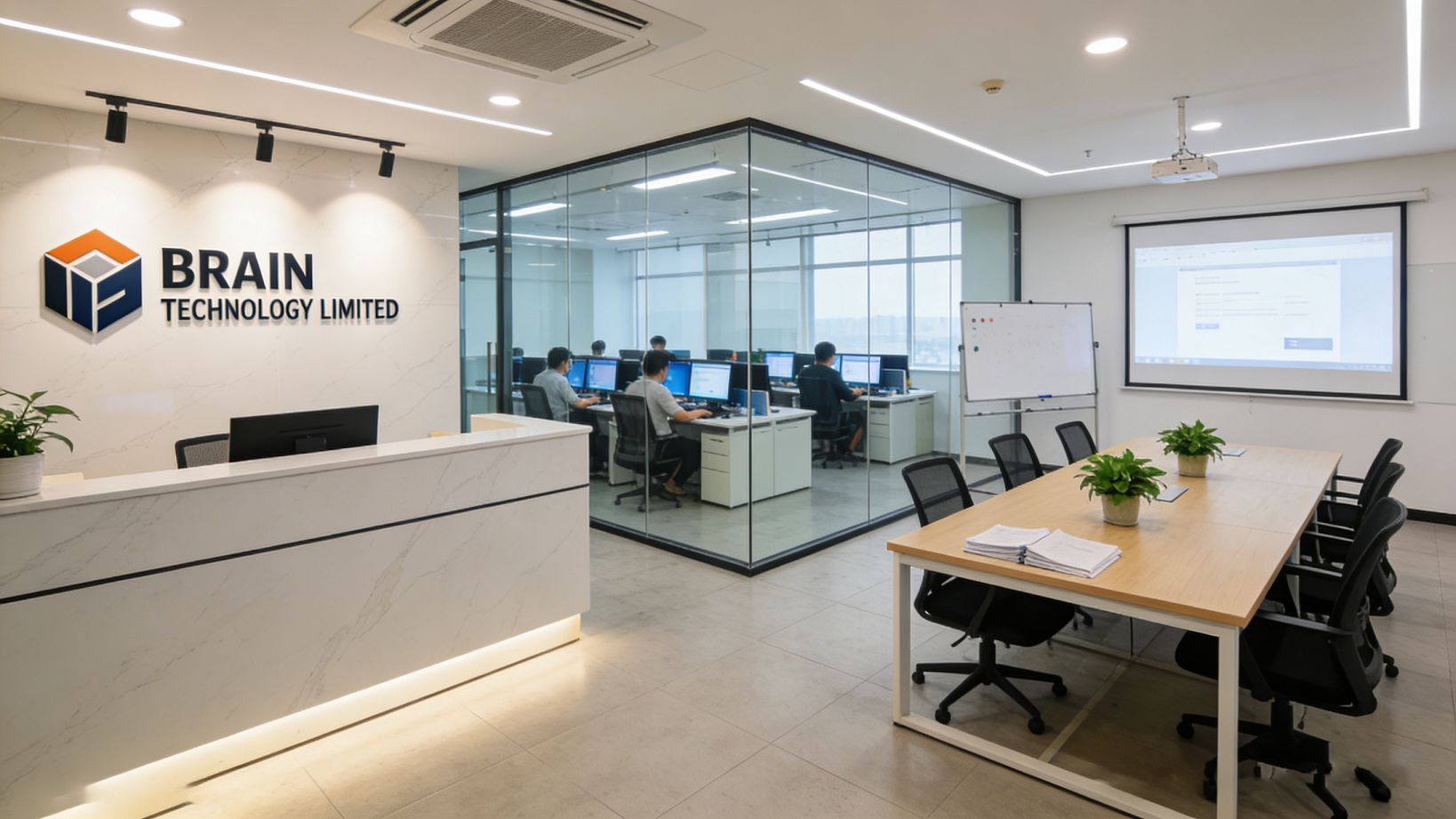
## BRAIN TECHNOLOGY LIMITED PerspectiveAt BRAIN TECHNOLOGY LIMITED, we have had the unique opportunity to observe—and contribute to—this automation transformation from the trenches. Our core insight, honed across years of shaping financial data strategies and building AI solutions, is that success is not measured by the number of bots deployed or the accuracy of a model in isolation. It is measured by resilience—the ability of the entire operating environment to absorb change without breaking. We have seen too many firms treat automation as a series of discrete IT projects, only to discover that their architecture is more brittle than before. Our approach is to enforce a “systems view” from the outset: every automation must fit into a defined data pipeline, must have a clear exception path, and must contribute to a single source of truth.
We also believe strongly in the principle of “human-centric automation.” Too many vendors push a narrative of total autonomy, which is both unrealistic in a regulated environment and counterproductive in terms of employee morale. Instead, we design automations to augment the human decision-maker, not replace them. By focusing on the distribution of intelligence—where machines handle the mundane and humans handle the nuanced—we create operations that are not just efficient but also adaptive. Our most successful clients have shifted their internal mindset from “automate everything” to “automate the predictable, but reserve human genius for the unpredictable.”
As financial institutions face the next wave of disruption—from digital assets to embedded finance—the winners will be those who treat their middle and back office as a source of strategic agility rather than a legacy to be maintained. We are proud to be on that journey with them. The future of finance is not about humans vs. machines; it is about a beautiful, messy, and entirely human-led partnership with the machinery that frees us to grow.
---Author’s note: This article reflects my personal views and experiences, not necessarily those of BRAIN TECHNOLOGY LIMITED. Peer review and challenge are always welcome.
---